Preparing for the unexpected: estate planning through a will

The troubled times we are living through lead many of us to think about the future, and in particular about the consequences of a possible death.
The notaire has always been the trusted adviser of families on family transfers and estate planning: gifts, division of assets, wills, lasting powers of attorney (« mandat de protection future »), general powers of attorney, and so on.
In this article, we look at why a will is useful in ensuring that what happens after your death respects your wishes as closely as possible.
Given the state of emergency, we will also explain how you can make your will at a time of social distancing and limited in-person appointments.
Protecting your family, sharing out your assets… what can a will provide for?
A will is a tool for planning the effects of your future death. Within the limits set by law, you are completely free to decide what goes into it.
Each person must write their own will: joint wills made by a couple (« conjonctifs », in technical terms) are not valid.
Here are a few examples of provisions that can be included in a will:
Leaving your estate to your PACS partner
The members of a couple who have registered a civil partnership (PACS) do not inherit from each other under the law. The only way for your partner to inherit is to include them in your will.
This is all the more important since there has been no inheritance tax between PACS partners since 2007.
Naming particular beneficiaries for some or all of your assets
For example, you can leave a sum of money to a charity, a family heirloom to a grandchild, and so on.
The legacies will be carried out within the limits of French law, which protects children and, in certain situations, the surviving spouse (through the reserved share of the heirs, « réserve héréditaire »).
It is, however, strongly recommended that you first name a universal legatee, who will be the « point of reference » for the estate and responsible for handing over the specific legacies.
In any event, writing a will is a serious act that binds you beyond death, and it must be prepared to measure, with the help and advice of your notaire.
It is also possible to provide for the division of your properties. We recommend, however, that you contact DAVID NOTAIRES (Aix-en-Provence) to assess the civil-law and tax advantages of arranging a gift and division (« donation-partage ») in advance.
Appointing guardians for your children if both parents die at the same time
You can appoint one or more guardians, either in order of priority (x, failing whom y, failing whom z…) or with their duties divided between them (education, management of assets, etc.).
The guardian appointed does not have to be a family member.
Where divorced parents disagree, you can also make your minor child your universal legatee, on the express condition that the property you leave them is managed, until your child comes of age, by the person of your choice (who need not be the surviving parent). This gets around the rigidity of guardianship and allows key decisions about the assets to be taken in the child's interest. The choice of that person is, of course, essential.
Appointing an executor
This is a key institution in French law, which all but prohibits the Anglo-Saxon trust, with the exception of this « executor » (« exécuteur testamentaire »): a trusted third party appointed to help the notaire oversee and manage the estate.
It is best kept for complex estates, in terms of both the size of the assets and the family situation, but it is indispensable for making civil-law and tax choices during the estate. Here too, the choice of executor is crucial: someone objective, well informed, respected and trusted by all the heirs.
Arranging your funeral and other personal matters
A will may contain personal wishes about your funeral and provisions such as the wish to donate your body to science. Be sure, however, to leave a copy with people close to you, who can produce it early enough for your wishes to be respected.
What can you do during the Covid-19 health emergency?
DAVID NOTAIRES (Aix-en-Provence) remains available to its clients during this unusual period, and you can still book a consultation by telephone or videoconference for advice on the provisions to include in your will.
As for the will itself, it is recommended – for the time being – to make a holographic will (dated, signed and written by hand by the testator). After confirming your wishes during the consultation, the notaire can e-mail you a model based on your discussion to help you write the final version.
If necessary (for example, a serious illness preventing the testator from writing their own will), notaires are allowed, in compliance with the required health rules, to receive an authentic will at the client's home. This is a will written by the notaire as dictated by the client, in the presence of two witnesses or a second notaire.
How can I make sure my will is found?
It is crucial to give your will to your notaire, who will register it in the central register of last wishes.
This register, which is open to the public, is consulted when the estate is settled and allows any notaire in charge of the estate to learn of the will. The French register of wills is also connected with its European counterparts.
During the health emergency, we recommend that you keep your will at home where possible, to avoid postal problems. Later, you can send it by tracked post or hand the original to your notaire.
International situations – choosing the law applicable to your estate, and coordinating
In an international situation, we cannot stress enough the importance of planning your estate in advance, in a coordinated way between France and the other countries concerned.
In France and in Europe (except Denmark, the United Kingdom and Ireland), European Regulation No 650/2012 has applied since 17 August 2015.
It lays down a single principle: the law applicable to the estate is that of the deceased's last habitual residence at the time of death.
Sometimes, identifying the habitual residence of expatriate or international individuals and families can prove difficult (interests in several countries) or changeable (frequent moves). With this in mind, the European regulation provides an important tool for international, and especially European, clients: the possibility of choosing, by will, your national law to govern your entire estate.
This choice will simplify the later settlement of the estate by applying a single law, and, as mentioned above, it will be recognised in all Member States of the European Union except Denmark, the United Kingdom and Ireland.
Finally, while in a purely national context it is recommended to have only one will, in an international setting, given the different national rules that apply, it may be necessary or advisable to make several wills. You should then check with your notaire that the various provisions are compatible.
A will is a highly personal document that must allow your wishes to be carried out effectively. It should be « audited », or even renewed or amended, at every stage of life that may change your family or financial situation.
Jean-Pierre Lameta, Notaire, and Elodie Letouche
Your notaires for this topic
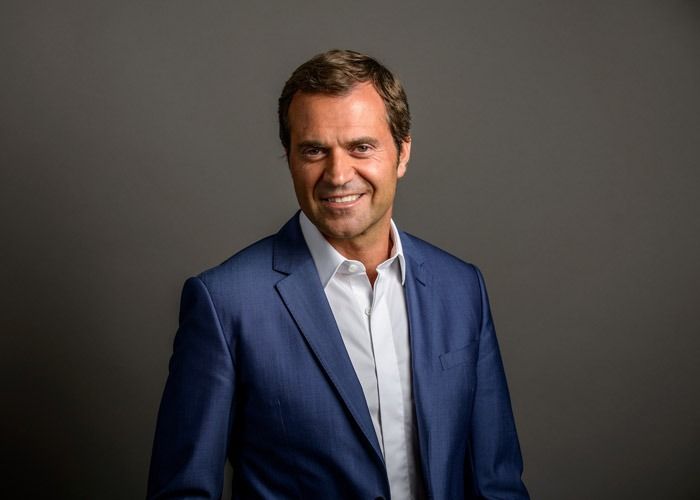 Maître Jean-Pierre LAMETAPartner notaireView profile →
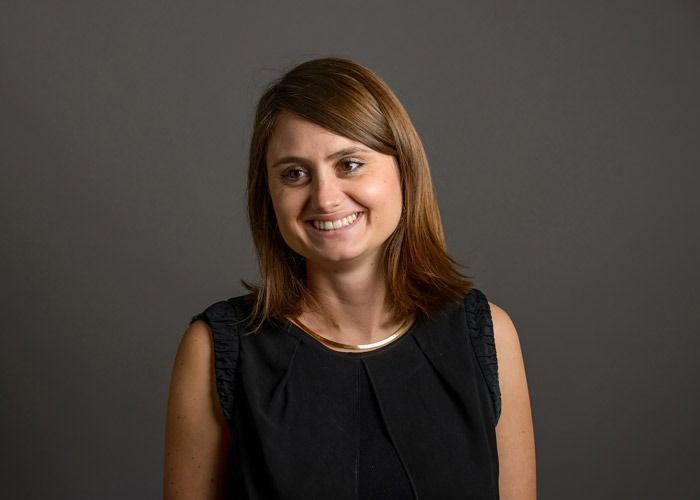 Maître Pauline CÉZANNEPartner notaireView profile →
Area of expertise: Personal wealth and succession planning
Get our next articles by e-mail